
How Often Should a Beginner Train BJJ?
Build a realistic beginner jiu-jitsu routine with a sample weekly plan, useful progress checks, and enough room for work, family, and life outside class.
Published 4 min read
Editorial archive · . The archive date organizes this guide series. Publication is recorded above.
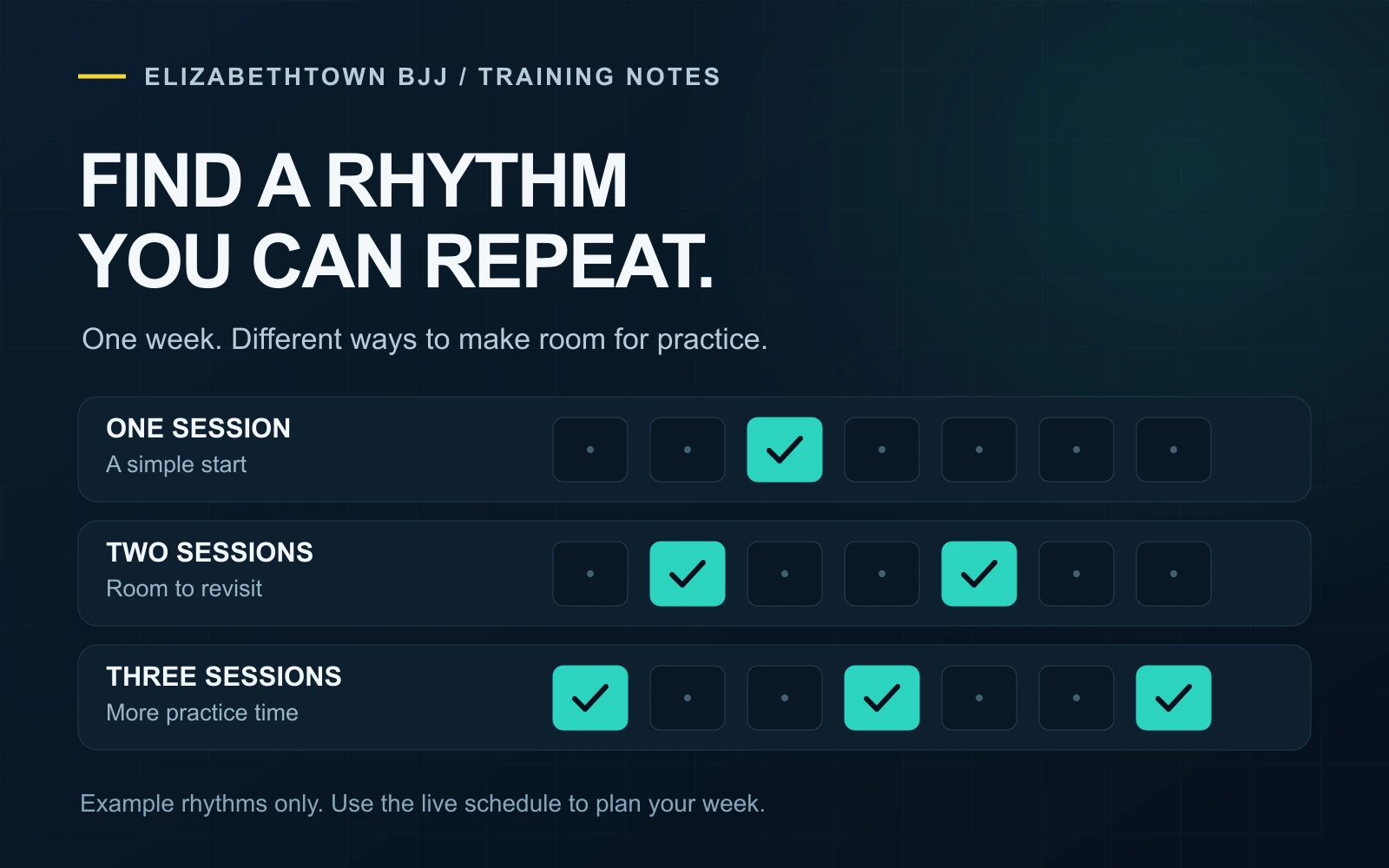
How often should a beginner train Brazilian Jiu-Jitsu? Start by finding the classes you can attend consistently, then decide with your coach whether that amount and intensity fit your current situation.
Two suitable classes in a normal week can be a useful planning target. Treat that as an example to discuss with your coach, then adjust it to your week. One repeatable class can be a more honest commitment than a five-day plan you abandon.
Plan for a normal week. Choose a manageable base routine first. Add training because the routine is working, rather than because you feel behind.
Count the whole session, including getting there
When you look at the Elizabethtown BJJ schedule, put more than the class time on your calendar. Include travel, changing, the conversation afterward, and getting your gear washed. Parents and people working shifts may need a backup plan for the weeks when that window disappears.
Pick classes appropriate to your experience. A beginner-friendly class and an open mat are different things. Check the beginners program and ask the coach which sessions to use as your base before adding unstructured rounds.
Also be clear about your goal. Learning a new hobby, returning after a long break, and preparing for a tournament do not require identical plans. You can change your plan as your goals change.
A sample week, not the academy timetable
Here is one way to organize two classes. The days are placeholders; use the live schedule to find actual sessions.
- First class: Follow the lesson and leave with one technical detail to remember.
- A day away from the mats: Write down that detail and one question. Keep the rest of your normal responsibilities in the plan.
- Second class: Ask your question at an appropriate time and look for where the earlier idea appears again.
- End of week: Check whether the routine fit your life and whether the amount of training felt manageable.
If only one class is realistic, keep it on the calendar and tell the coach. Ask what to focus on between visits. A short note about the lesson is more useful than promising yourself hours of unsupervised technique practice.
Attendance and intensity are separate choices
Two visits can contain very different amounts of work. There is a difference between learning a drill, practicing a specific position with agreed resistance, and doing repeated competitive rounds. Counting visits alone misses that difference.
Tell the coach how much experience you have and how your previous session went. Ask what live work is appropriate that day. Before a round, agree on the type of practice and pace with your partner. “I want to practice this position slowly” is a clearer request than “Let's go light,” which can mean different things to different people.
Do not turn a missed class into a reason to cram several hard sessions together. Resume the routine at the next suitable class. If pain, an injury, or a health concern affects training, get appropriate professional advice rather than treating the calendar as an instruction to push through.
Use a progress check you can actually observe
At the end of a few weeks, ask yourself:
- Can I identify more of the positions the coach names?
- Can I set up the current drill with less help?
- Do I understand one mistake well enough to ask a specific question?
- Is this routine compatible with my work and family commitments?
- Am I ready to discuss another session, or should I keep the same plan?
None of those requires a belt deadline or a tally of training partners you submitted. Early progress often needs a more useful description than a win or a loss.
Add a third session with a purpose
If your base routine is working, discuss an additional class with the coach. Decide what it adds: another coached lesson, more practice of a specific position, or suitable open mat work. Extra attendance should have a job.
You can read about how open mat differs from class before adding it. For a first routine in Elizabethtown, contact the academy with the days you can reliably attend and ask which beginner sessions make sense.