
BJJ for Fitness or Weight Loss: What Your Results Can Tell You
Separate activity, skill, and weight outcomes when starting BJJ. Understand the adult activity guidelines without treating every class minute as the same exercise.
Published 4 min read
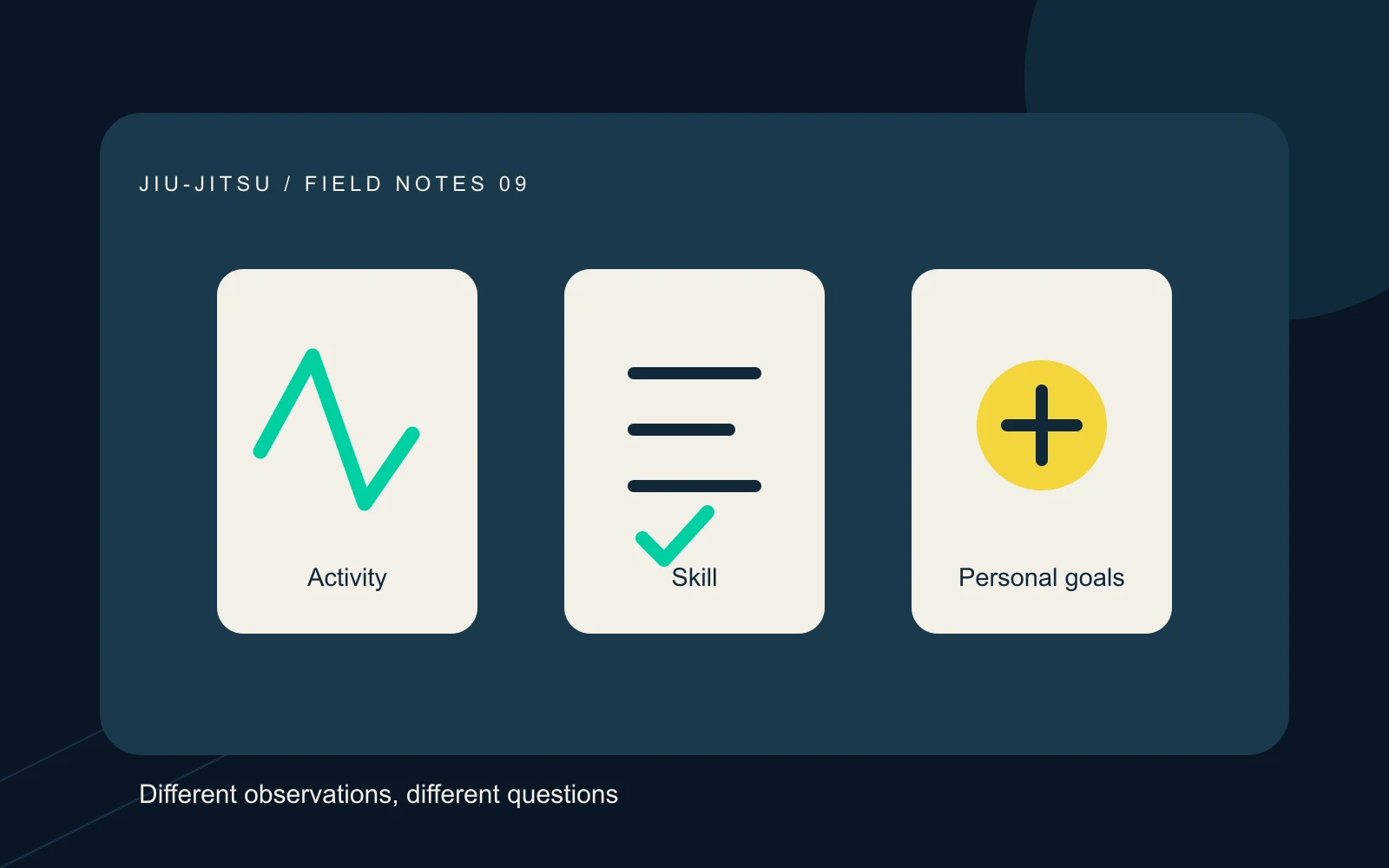
BJJ can be part of an active life, but joining a class does not promise a particular weight change. Attendance, physical activity, skill, and body weight are different things to observe. A change in one does not prove a change in the others.
If fitness is why you are starting, make the question specific: “What activity did I actually do, what am I learning, and which health goals need individual advice?” That is more informative than asking whether a month of classes “worked.”
Put the adult guidelines in context
The current federal Physical Activity Guidelines remain the second edition as checked on October 21, 2026. For adults, they recommend 150 to 300 minutes of moderate aerobic activity a week, or 75 to 150 minutes of vigorous activity, or an equivalent combination. They separately recommend muscle-strengthening activity involving all major muscle groups on at least two days a week. Some activity is better than none; inactive adults should build up gradually.
These are broad population guidelines, not an individual BJJ program. The recommendations and adaptations for children, older adults, pregnancy, disabilities, or health conditions require the relevant guidance and individual advice.
A class is not a single intensity
Watching a demonstration, cooperative repetition, and live grappling are different activities. A class lasting an hour does not automatically provide an hour of moderate or vigorous aerobic work. Counting rounds also leaves out their length, effort, pauses, and task.
Similarly, physical effort in BJJ does not establish that all muscle-strengthening recommendations have been met. Keep aerobic activity and strength work distinct when discussing your overall week. The strength-planning article covers coordinating those commitments without prescribing a universal program.
Read a result without overclaiming it
Consider three hypothetical observations:
- “I attended the sessions I planned.” This tells you the routine fit your life during that period. It does not measure weight loss or exercise intensity.
- “I needed fewer reminders to set up the drill.” This is a learning observation. It does not establish an improvement in cardiovascular fitness.
- “My weight stayed the same.” This describes the scale result. It cannot by itself show that no useful activity or learning occurred, or explain why weight stayed stable.
The reverse matters too. Weight loss does not by itself prove that a training plan is appropriate, and finishing more rounds is not a medical fitness assessment. If an outcome concerns you, describe the observation to the relevant professional instead of turning it into a diagnosis.
Choose observations that match your question
You might note which parts of class you joined, how the activity felt, what you learned, or whether you enjoyed attending. These are optional examples, not validated health measures. Stop and seek appropriate help for pain, injury, or concerning symptoms rather than treating completion as a target you must meet.
If tracking weight or measurements is useful for your personal goal, discuss an appropriate approach with a healthcare professional or registered dietitian. There is no universal weighing frequency in this article. You can choose not to track body measurements at all.
HHS emphasizes that weight management depends on both activity and calorie intake and varies substantially between individuals. Its guidance does not supply a promised rate of weight loss from BJJ. This article gives no calorie-burn estimate, diet restriction, supplement plan, or competition weight cut.
Ask about the experience you will actually join
The training-frequency guide already handles scheduling. Here, the next step is to tell the instructor your starting experience and fitness goal, then ask what participation in a beginner session involves. Take individual health and nutrition questions to an appropriate professional.
If you want to explore a first class, contact Elizabethtown BJJ. Judge the visit by what you learn about the activity and whether you want to continue, without requiring it to promise a number on the scale.
Sources
- HHS: Current Physical Activity Guidelines, checked October 22, 2026.
- Physical Activity Guidelines for Americans, second edition, 2018; checked October 22, 2026. Adult recommendations, gradual progression, and weight-management context.