
Back Control for Beginners: Keep the Position Before Chasing the Finish
Understand the purpose of back control, recognize both turning directions and watch John Danaher explain left/right control in an official BJJ Fanatics lesson.
Published 3 min read
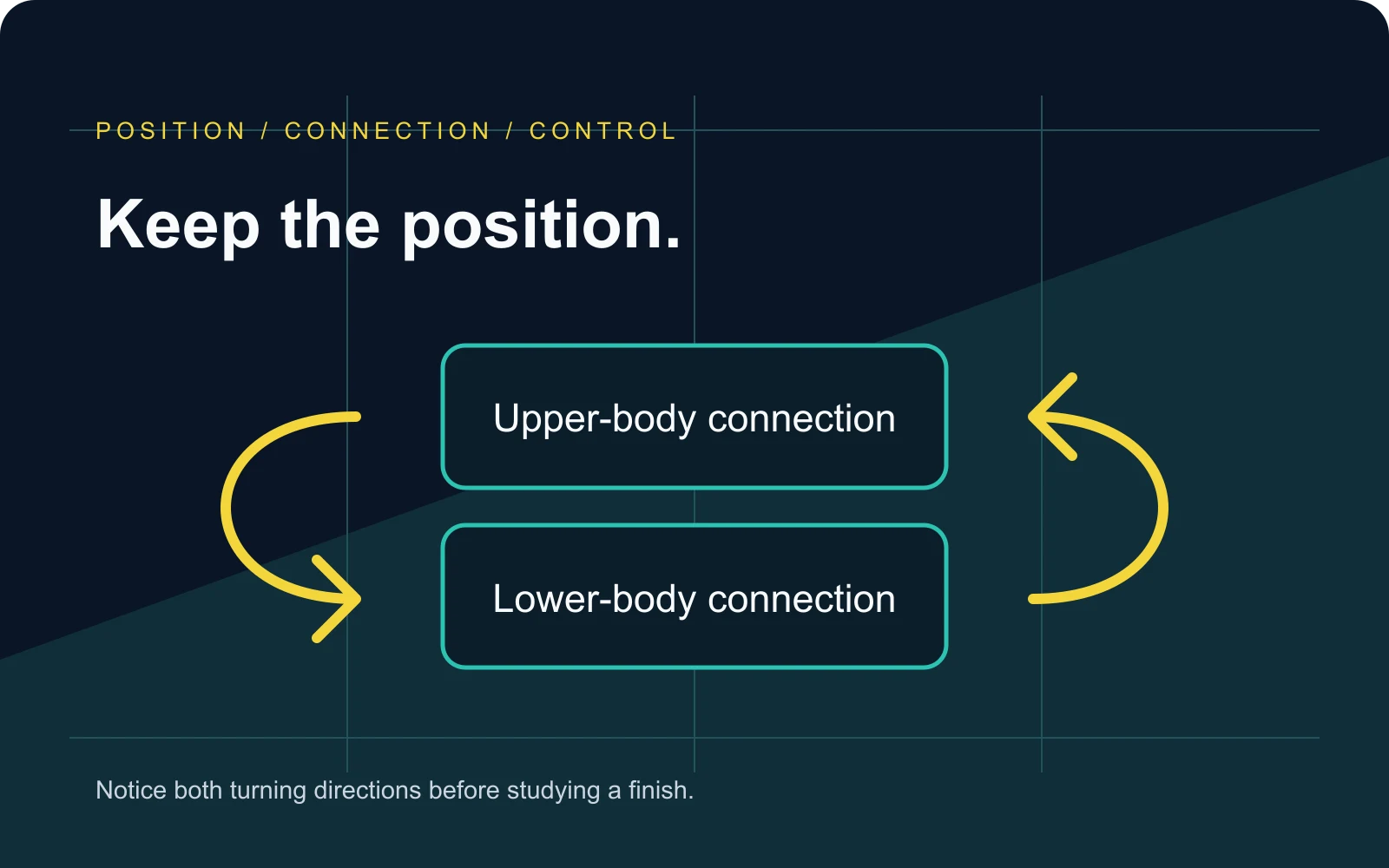
Getting behind a training partner and keeping control there are different problems. Start by understanding what keeps the position together before looking for a submission.
In this public lesson, John Danaher asks what prevents the person in front from turning either way.
What the connections are for
Back control means controlling a partner from behind. A seatbelt is an upper-body connection, with one arm over a shoulder and the other under the opposite arm. Hooks are leg or foot connections used for control. Recognizing those names is a starting point; each connection has a job.
In this lesson, Danaher explains upper-body control through the elbows and shows how upper- and lower-body connections can work diagonally. The point is to account for both turning directions, rather than treating clasped hands as proof that the position is secure.
For a first viewing, follow that control problem. The clip contains details to study with instruction; it does not require a new student to copy every variation or move straight to a finish.
Watch the official lesson
John Danaher — “StraitJacket System - Preliminaries: Left Right Control by John Danaher.” Published by BJJ Fanatics, July 19, 2018; 7 minutes 25 seconds. Watch on YouTube.
The publisher’s accompanying explanation discusses the same clip.
Notice the position before the outcome
Imagine watching a round from the side. One student reaches for a finish; the other turns and the exchange moves to a different position. “The submission did not work” describes the ending, but leaves the earlier change unexplained.
A more useful observation is the order of events: where the partners began, when their connection changed and which way the person in front turned. If your view hides an arm or leg, leave that detail unresolved. A camera angle does not fill in a missing contact.
Use the same distinction when watching the lesson. First identify the arrangement Danaher is discussing. Then watch what he says that connection prevents. When he changes the arrangement, notice which part of the control problem changes with it. You are trying to understand a relationship between two people, rather than memorize a pose.
This also separates three ideas that can look similar to a newcomer: reaching a position, maintaining it and using it to attack. Success at one does not settle the others. You can learn something from recognizing the change even if you do not yet know the response.
Bring one clear question to instruction
After watching, choose a moment you can describe plainly: “I can see the grip, but I cannot tell what stops the turn on the other side.” That gives an instructor a specific uncertainty to address. Avoid turning a viewing question into an unsupervised submission attempt.
In class, follow the exercise the instructor assigns and make sure your partner understands the task. Release immediately for a tap or spoken stop. A video does not establish which techniques or variations belong in a particular session.
The beginner glossary explains unfamiliar position names. The practice-formats guide explains how drilling and positional practice differ. Those pages help with vocabulary and the format of a lesson; this article’s question is what keeps back control connected.
If you are considering a first visit, start with the academy’s beginners program. You do not need to arrive with a finished submission system. Bring the question you want help understanding.