
BJJ Hygiene: A Gear Routine You Can Actually Keep
Keep clean and used training gear separate, follow care labels and check clothing and equipment before class.
Published 3 min read
Editorial archive · . The archive date organizes this guide series. Publication is recorded above.
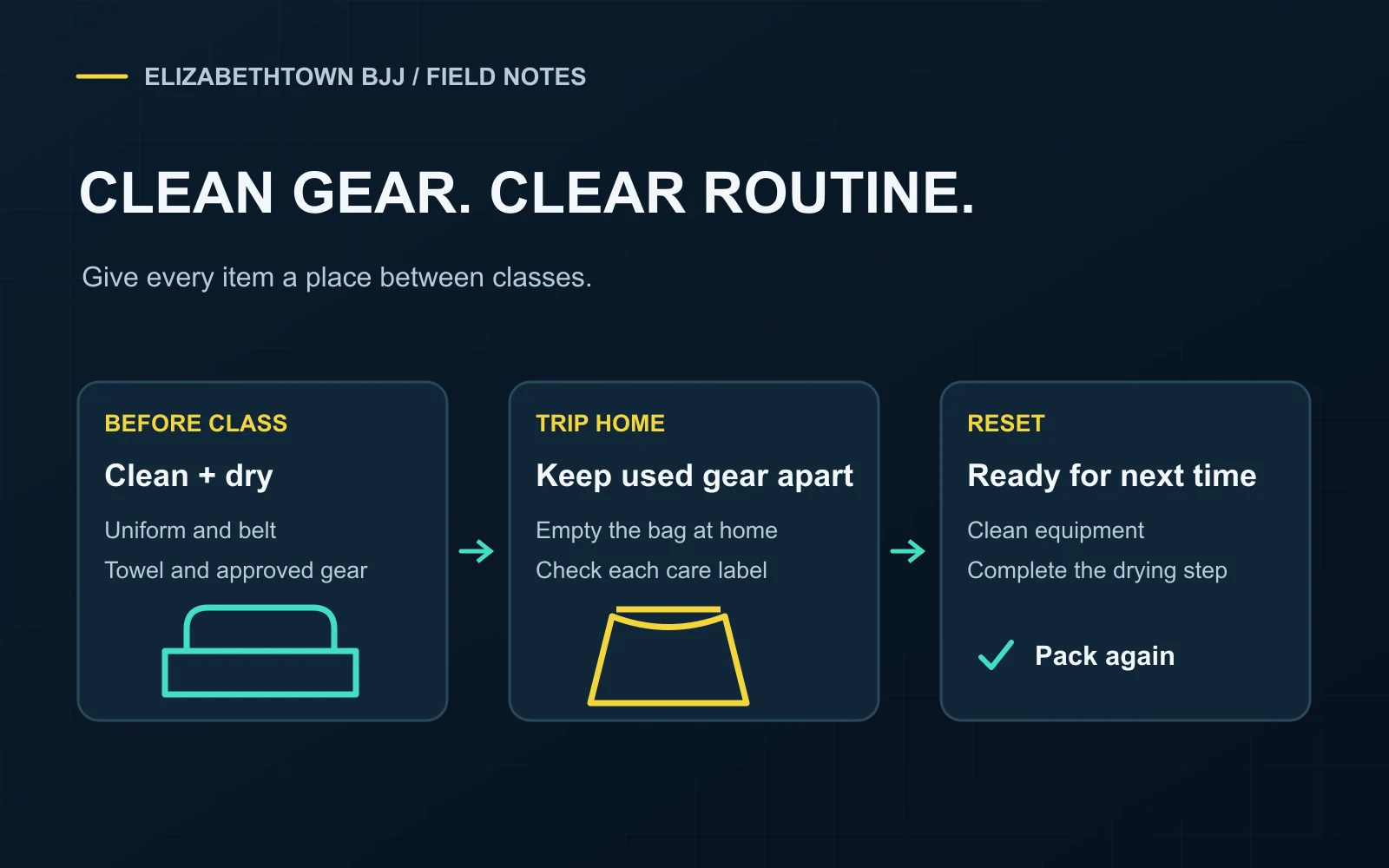
The useful question after class is not whether your gi still looks clean. It is where everything goes before the next session. A damp uniform left in a zipped bag turns a small chore into a problem you carry back to the mat.
Set up a routine that separates clean equipment from used equipment, gets laundry moving, and leaves enough time for everything to dry properly. The details depend on your gear’s care labels. The routine should not depend on remembering it when you are already late for class.
Give your bag two jobs, at different times
Before training, the bag carries clean clothing, a clean towel, water, and any equipment your coach has approved. Afterward, it carries used equipment home. A washable laundry sack can keep those clothes separate from the rest of the contents during that trip. Empty it when you get home rather than treating it as storage.
Use this short arrival-home sequence: water bottle to the sink, used clothing to the laundry area, reusable equipment out for the care its manufacturer specifies, and the empty bag open for inspection. Wipe or wash the bag according to its instructions. Check the corners and smaller compartments before putting clean clothing back inside.
Make the next class easier: Pack the clean set only after you have dealt with the used set. That keeps a clean rash guard from ending up beside yesterday’s damp towel.
Read the care label before choosing the wash cycle
The CDC’s athlete hygiene guidance calls for washing uniforms, towels, and clothing after each use, following clothing-label instructions, and completely drying them in a dryer. Some grappling garments have restrictive care labels. Check that before buying, and ask the manufacturer how the garment can be cleaned and dried consistently with that guidance. Do not assume that a quick rinse or deodorizing spray replaces laundering.
Keep a photo of each label if the printing is wearing off. A gi jacket, belt, rash guard, and compression shorts may have different instructions. Turning up the heat beyond a label’s limit can damage equipment; leaving items partly damp to save time is not a good packing shortcut either. Having a second clean set can solve a scheduling problem more usefully than trying to rush one set through an unsuitable cycle.
Use a pre-class inspection that takes less than a minute
- Are the uniform, belt, and towel freshly cleaned and fully dry?
- Are nails trimmed and smooth, and jewelry removed?
- Is there a torn seam, exposed fastener, or rough patch that could catch someone?
- Do you have footwear for off-mat areas, rather than walking there barefoot and returning to train?
Follow the academy’s current mat and footwear rules. Gear permission also varies by class, so confirm unfamiliar equipment before using it. Our gi and no-gi guide explains the clothing categories; this checklist is about keeping that clothing ready for repeated use.
When the routine breaks, change the plan
- No clean, dry set: Arrange another suitable session instead of rewearing used clothing or packing something damp.
- Unclear care instructions: Ask the manufacturer how to clean and dry the specific item before choosing a cycle.
Raise participation concerns before partner work
If a concern makes you unsure about contact participation, pause and tell the instructor. Individual health questions belong with an appropriate healthcare professional.
For a first visit, confirm current gear and mat requirements before packing.