Gi vs. No-Gi BJJ: Differences and Beginner Gear
Learn how gi and no-gi jiu-jitsu differ in grips and clothing, then use a practical gear checklist to prepare for your first class in Elizabethtown.
Published 4 min read
Editorial archive · . The archive date organizes this guide series. Publication is recorded above.
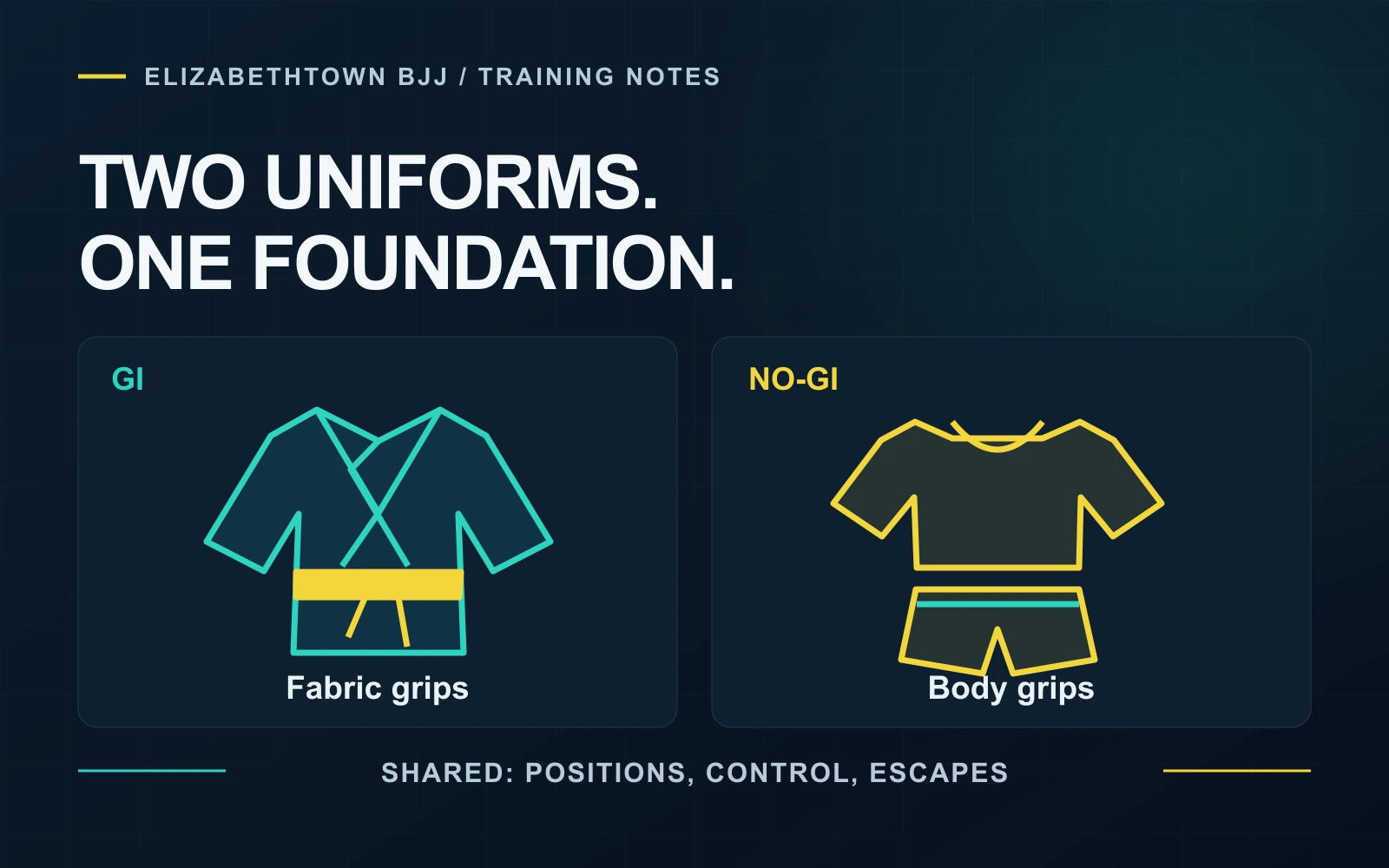
Gi and no-gi are two ways to train Brazilian Jiu-Jitsu. Both involve working with a partner on control, escapes, and submissions. The obvious difference is the clothing. The useful difference to understand is what that clothing lets you grip.
For a beginner, this does not need to become a debate about which format is better. Find a suitable class, understand its requirements, and buy equipment for the training you will actually do.
Before you pack: ask the gym, “Is this session gi or no-gi, what should a first-time student wear, and do I need to arrange a uniform?” Confirm the answer for your chosen class.
Gi: the uniform becomes part of the problem
A BJJ gi has a jacket, pants, and belt. It is made for grappling, where permitted grips on the uniform can help control movement. A sleeve or collar creates a connection that does not exist in no-gi.
That adds another thing to learn: how to establish, manage, and release fabric grips. Two people can be in a familiar position but face a different problem because one person controls a sleeve. Some techniques also use the jacket itself.
This does not mean strength and movement stop mattering. It means there are additional connections to recognize. Your coach can help you focus on the grip relevant to that day's lesson instead of trying to understand every possibility at once.
No-gi: control without holding the uniform
No-gi removes the gi jacket and pants. Clothing commonly includes a fitted rash guard and grappling shorts, sometimes with compression leggings. Control relies on permitted connections to the body rather than holding the clothing.
Without a sleeve to hold, the same broad goal may need a different solution. You might still be trying to keep someone close or stop them moving past your legs, but your contact points change. Ask what grips and techniques are permitted before practice.
You may hear that no-gi is always fast and gi is always slow. Those descriptions are too simple to plan a class around. The exercise, partners, intensity, and rules affect pace. Neither outfit tells you how hard a particular round will be.
Which format should a beginner choose?
Start with instruction and availability. A class that introduces you properly and fits your week is a practical place to begin. You do not have to decide how you will train for the rest of your life.
At Elizabethtown BJJ, review the beginners program and current schedule, then confirm the session with the gym. Do not assume that every format has a separate beginner class, or that open mat is an introductory no-gi lesson.
If you want to train both eventually, ask which sessions suit your experience. Learning one format does not make the other automatic, but familiar goals such as balance, distance, and positional control give you useful questions to bring across.
Check clothing before buying equipment
Our published first-visit guidance is to bring workout clothes and water unless the coach gives different gear instructions. For approved workout clothing, choose items that stay in place when you bend, sit, and turn. Check for hard fasteners, exposed zippers, or pockets that could catch a finger or toe.
A gi should fit the requirements of the academy and the person wearing it. Ask about sizing and uniform preferences before ordering. A uniform intended for another martial art may not suit BJJ practice, and everyday clothing sizes are not a reliable gi fitting guide.
Use the current pricing and introductory-offer page, then ask the gym what equipment is included and what you need to arrange before arriving. Confirm size availability rather than assuming a uniform can be collected on the spot.
Class rules and tournament rules are different questions
If you later compete, check the actual event's uniform rules. The IBJJF uniform guidance sets requirements for gi and no-gi competitors at its events, including clothing specifications. Another organizer may use different rules.
You do not need tournament equipment research to ask about a first class. Get the academy's instructions first. If competition becomes a goal, your coach can help you identify the right rulebook before you spend money.
A practical first-class bag check
- Clothing approved for the session, checked for fit and hard fasteners.
- Water and easy-to-remove footwear for moving off the mat.
- A clean change of clothes and a separate bag for used gear.
- Any additional equipment the coach specifically asks you to bring.
Remove jewelry and watches before partner work, trim nails, and arrive in clean clothing. Follow the care label on your gear and wash it after use. These small preparations leave you more attention for the lesson.
Contact the gym to confirm your session and clothing. Then use our first-month learning map to make sense of what comes after you unpack your bag.