
How to Set a Goal for Each BJJ Class
Published · by Elizabethtown BJJ
Pick one specific thing to work on each class. “Get better at guard” is too big to use during a repetition. “Did I get my knee back inside before my partner settled the pass?” gives you one moment to watch for.
A useful class goal is a question you can answer afterward. It should fit the technique your coach taught and give you something more helpful to review than whether you won the round. If you are just starting, begin with what BJJ is and use the technique from your own class.
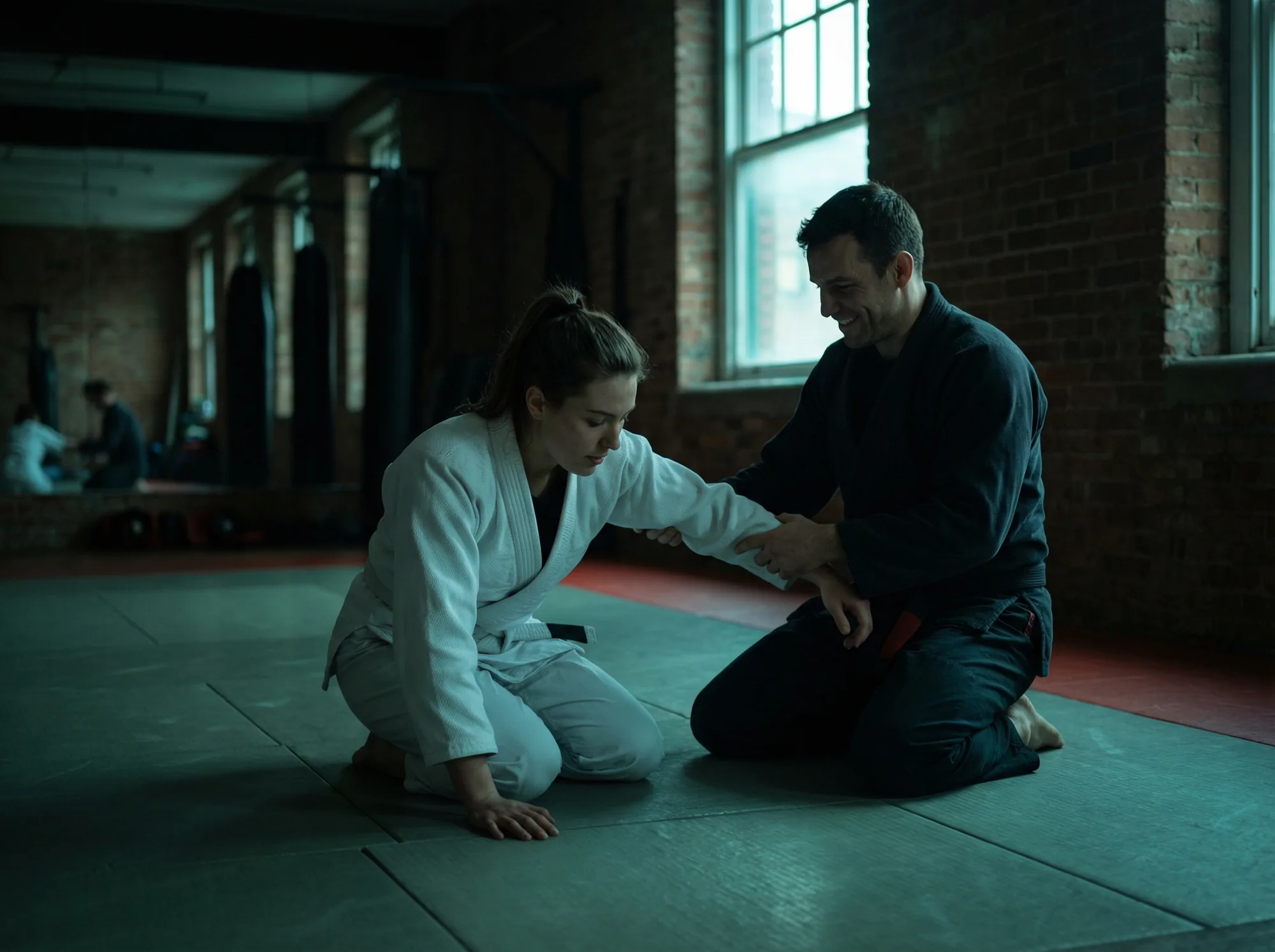
Three goals you can bring to class
Here are three illustrative examples, not guidance from this academy's coaches. Use one only when it matches the day's lesson, or ask your coach for a version that fits what you are practicing.
Escape from side control
“When I'm underneath side control, did I rebuild my frames before moving my hips?”
If you were flat and reached for your partner with straight arms, you have found the part to practice next. If you made a frame but still could not bring a knee inside, that is a more specific problem to show your coach. Our guide to basic BJJ escapes explains why structure comes before the guard-recovery movement.
Pass half guard
“Before I tried to free my trapped leg, did I establish the head and hip control from the demonstration?”
This keeps you from judging the pass only by whether your foot came loose. If you pulled at the leg before setting up the earlier controls, you know where the sequence broke down. The half-guard passing guide breaks down that order.
Set up a takedown
“Before I entered, did my grips and movement put my partner off balance?”
If the answer is no, ask the coach to watch your setup rather than forcing the finish or collecting more throws. Follow the falling and resistance instructions for that class. Our stand-up guide explains why balance, grips, and safe falling come before throwing practice.
Keep the drill the same
Your goal for the day doesn't change the drill your partner signed up for. Keep the starting position, level of resistance, and stopping point the coach gave you. Your goal is something to notice inside that exercise, not a new technique to add.
Ask your coach to narrow it
If you are not sure what to watch for, describe the exact moment where you get lost. “My partner clears my frames before I can move my hips” is easier to help with than “I'm bad at escaping.” The coach can choose the detail that matters and show you how to practice it.
One question is enough for the day. You do not need to fix the whole position in one class.
After class
Write down what happened at the moment you chose. “I remembered the head control twice, but lost it when my partner moved the far hip” gives you a useful starting point for next time. “I passed twice” only records the result.
Getting it right once doesn't mean you've got it. Look for the same detail over several classes, and bring the same question back to your coach if it keeps going wrong.
The first-month guide has a simple class-note format. If you use an outside lesson to review the movement, our guide to BJJ instructional videos shows how to bring one timestamp and one question to your coach.